


Drywood Termites – Best Drywood Termite Treatment Phoenix Az
Drywood Termites Phoenix Az: Expert Detection, Treatment & Prevention
Discovering termites in your Phoenix home is a serious situation that demands immediate professional attention. Unlike their more common subterranean cousins, Western drywood termite colonies establish themselves entirely within the wooden structures of your home—no soil contact required. This makes them particularly elusive and destructive, capable of causing extensive damage before homeowners even realize they have a problem.
Metropolitan Phoenix’s warm, dry climate creates ideal conditions for termites to thrive year-round. These wood-destroying insects are considered by many experts to be the most destructive termite species in North America, making early detection and professional drywood termite treatment absolutely critical for protecting your property investment.
Bill’s Pest Termite Control has been Phoenix’s trusted drywood termite extermination specialist for over three generations. As Arizona’s Termite Experts with more than 8,000 five-star reviews, we’re the company that other pest control professionals call when they encounter drywood termite problems beyond their capabilities. Our comprehensive inspection and treatment services provide Phoenix homeowners and businesses with the expert protection they need against these silent destroyers.
What Do Drywood Termites Look Like?
Accurate identification is crucial for effective drywood termite treatment. Understanding what these pests look like helps you recognize warning signs early when intervention is most effective and affordable.
Adult Drywood Termite Characteristics
Size and Color: Adult drywood termites are larger than their subterranean relatives, measuring approximately 3/8 to 1/2 inch in length including their wings. They range in color from light tan to dark brown, with variations depending on caste (soldiers, workers, or reproductives).
Swarmers: Reproductive drywood termites, called swarmers or alates, are the most visible life stage for Phoenix homeowners. These winged termites typically swarm during summer months in Phoenix, emerging from mature colonies to establish new infestations. Swarmers are attracted to light and often appear near windows, which is when most homeowners first notice their presence. After landing, they shed their wings, leaving behind distinctive paired wings as evidence.
Soldiers and Workers: Soldier drywood termites have large, dark brown heads with powerful mandibles used for colony defense. Worker termites are cream-colored, wingless, and rarely seen since they remain hidden within wood galleries.

How Do I Know If I Have Drywood Termites?
Detecting termites in Phoenix homes requires knowing what warning signs to watch for, though these pests can remain completely hidden for years without showing any visible evidence.
Drywood Droppings: The Primary Warning Sign
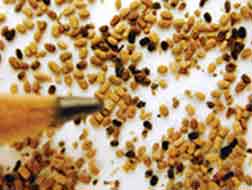
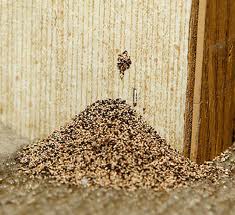
Drywood termite droppings, also called frass or pellets, provide the most reliable indication of active infestation. These distinctive pellets are the waste products drywood termites push out of their galleries through small “kick-out holes” to keep their living spaces clean.
What Drywood Termite Droppings Look Like: The pellets are tiny—about 1mm in size—with a distinctive six-sided, elongated shape resembling miniature grains of rice or coffee grounds. Colors range from tan to dark brown, often matching the color of the wood being consumed. These pellets accumulate in small piles below kick-out holes, typically found along baseboards, window sills, or near wooden furniture.
Other Signs of Drywood Activity
Kick-Out Holes: Small, round holes (about 1-2mm diameter) in wood surfaces indicate where drywood termites expel their waste. These holes often appear clean and smooth-edged, distinguishing them from other wood damage.
Discarded Wings: After swarming, drywood termites shed their wings near entry points. Finding paired wings near windows, doors, or on window sills suggests recent swarm activity and potential new infestations.
Hollow-Sounding Wood: As termites consume wood from the inside out, structural members develop hollow internal galleries. Tapping suspected areas produces a hollow sound rather than the solid sound of undamaged wood.
Blistered or Damaged Wood Surfaces: Advanced infestations may cause wood surfaces to appear blistered, cracked, or damaged as internal galleries compromise structural integrity.
The Challenge of Silent Infestations
Drywood termite colonies can exist for years—even decades—without producing visible signs. Small colonies work slowly, and homeowners often don’t discover infestations until selling their property and requiring termite inspections. This is why annual professional inspections are essential for Phoenix properties, providing early detection when drywood termite treatment is most affordable and effective.

Subterranean vs. Drywood Termites: Understanding the Differences
Phoenix homeowners often confuse these two termite types, but understanding the differences is critical because they require completely different drywood termite treatment approaches.
Habitat and Behavior Differences
Moisture Requirements: Subterranean termites require constant moisture and maintain connection to soil through distinctive mud tubes. Drywood termites extract all necessary moisture from the wood they consume, thriving in Arizona’s dry climate without any soil contact.
Colony Location: Subterranean colonies live underground with workers traveling to and from wood sources. Drywood termite colonies exist entirely within the wood they infest—eating, living, and reproducing in the same wooden structure.
Colony Size: Subterranean colonies can contain hundreds of thousands of individuals. Drywood termite colonies are much smaller, typically numbering in the hundreds to a few thousand. However, multiple drywood termite colonies often infest the same structure simultaneously.
Damage Pattern Differences
Subterranean Damage: Creates mud tubes on surfaces, damages wood from ground level upward, and often affects structural lumber in contact with foundations.
Drywood Termite Damage: Can affect any wood throughout your Phoenix home—furniture, picture frames, door jambs, window frames, attic lumber, and structural members regardless of proximity to soil. This makes drywood termites particularly concerning as they threaten both structural and non-structural wood elements.
Detection Differences
Subterranean termites are often detected through visible mud tubes. Drywood termites produce the distinctive pellet droppings that accumulate below infested wood. However, both species can remain completely hidden without producing obvious signs, making professional inspection by experienced specialists like Bill’s Pest Termite Control essential for accurate detection.
How Do I Get Rid of Drywood Termites?
Eliminating termites from Phoenix properties requires professional expertise and treatment methods unavailable to homeowners. The specific approach depends on infestation location, severity, and property characteristics.
Why DIY Drywood Termite Treatment Fails
Store-bought termite treatments prove completely ineffective against termites for several critical reasons:
Inaccessibility: Drywood termites burrow deep within wood structures where surface sprays cannot reach. Effective treatment must penetrate wood galleries thoroughly.
Colony Distribution: Multiple colonies often exist throughout a structure. Treating one visible infestation while missing hidden colonies allows continued damage.
Lack of Residual Protection: Amateur treatments provide no ongoing protection against new infestations or surviving colony members.
Misidentification: Homeowners often confuse drywood termites with other wood-boring insects, applying inappropriate treatments that waste time and money while infestations worsen.
Professional Drywood Extermination Methods
Accurate Identification: Professional drywood termite treatment begins with species confirmation by experienced inspectors who understand the subtle differences between termite types and can assess infestation severity accurately.
Customized Treatment Plans: Bill’s Pest Termite Control develops tailored drywood termite extermination strategies based on your specific situation, considering infestation location, property construction, and your budget.
Multiple Treatment Options: We offer various drywood termite treatmentmethods allowing you to choose the approach that best fits your needs and circumstances.

What Are the Different Treatment Methods to Get Rid of Termites?
Phoenix property owners have several professional drywood termite treatment options, each with specific advantages depending on infestation characteristics:
Localized Wood Treatment
When It’s Appropriate: Small, accessible infestations in isolated wood members can be treated locally using professional-grade termiticides injected directly into galleries.
The Process: Our technicians drill small access holes into infested wood, inject liquid termiticide under pressure, then seal holes. The chemical penetrates galleries, eliminating colonies while providing residual protection.
Advantages: More affordable than whole-structure treatments, less invasive, allows occupied buildings to remain inhabited during treatment, and provides effective elimination when infestations are limited.
Whole-Structure Fumigation
When It’s Necessary: Severe drywood termite infestations affecting multiple areas, inaccessible wood members (inside walls, roof structures), or situations where complete eradication is critical often require fumigation.
The Process: Your home is enclosed in specialized tarps, and fumigant gas (typically sulfuryl fluoride) is introduced, penetrating all wood members throughout the structure. The gas eliminates all drywood termite life stages—eggs, nymphs, and adults—providing complete eradication.
Advantages: Only method guaranteeing 100% elimination of drywood termites throughout the entire structure, treats inaccessible areas impossible to reach with other methods, and eliminates multiple colonies simultaneously.
Considerations: Requires temporary evacuation (typically 24-72 hours), involves higher costs than localized treatments, and provides no residual protection against future infestations.
Heat Treatment
When It’s Used: Heat treatment offers a non-chemical alternative for drywood termite extermination in specific situations where fumigation isn’t practical.
The Process: Specialized equipment heats affected areas or entire structures to temperatures lethal to drywood termites (typically 120-140°F) maintained for several hours.
Advantages: No chemical use, allows faster re-entry than fumigation, and effectively eliminates colonies in treated areas.
Limitations: Requires expensive specialized equipment, may not penetrate all wood members equally, provides no residual protection, and can potentially damage heat-sensitive items.
Wood Replacement
When It’s Appropriate: Small infestations in easily accessible, non-structural wood members can sometimes be eliminated through complete removal and replacement of affected wood.
The Process: Infested wood is completely removed and replaced with new, treated lumber, eliminating the colony and damaged material simultaneously.
Advantages: Permanently removes both pests and damage, cost-effective for small localized infestations, and eliminates concerns about chemical treatments.
Limitations: Only practical for small, accessible infestations; doesn’t address potential hidden colonies in other areas; and may miss infestations in adjacent wood members.
How Are Drywood Infestations Treated in Phoenix?
Professional drywood termite treatment in Phoenix follows a systematic process ensuring complete elimination and preventing recurrence:
Step 1: Comprehensive Professional Inspection
Bill’s Pest Termite Control’s free termite inspections include:
- Complete property assessment examining all accessible wood members
- Identification of active drywood termite activity and evidence
- Detection of drywood termite droppings and kick-out holes
- Assessment of damage severity and structural impact
- Identification of multiple colony locations if present
- Recommendations for most effective treatment approach
- Detailed written report documenting findings
Step 2: Treatment Method Selection
Based on inspection findings, we recommend the most appropriate drywood termite extermination method:
- Localized treatments for small, accessible infestations
- Whole-structure fumigation for severe or widespread problems
- Combination approaches addressing specific circumstances
- Cost-benefit analysis helping you make informed decisions
Step 3: Professional Treatment Implementation
Our licensed technicians implement chosen termite treatment using:
- Professional-grade products unavailable to consumers
- Proper application techniques ensuring complete penetration
- Safety protocols protecting your family and pets
- Quality assurance verifying treatment effectiveness
Step 4: Prevention and Monitoring
After drywood extermination, ongoing protection includes:
- Annual inspections detecting new activity early
- Recommendations for reducing future infestation risks
- Renewable warranties on most services
- Immediate response if termites return to treated areas

How Much Does a Drywood Termite Treatment Cost?
Drywood termite treatment costs vary significantly based on multiple factors specific to your Phoenix property and infestation severity. Understanding pricing helps you budget appropriately and evaluate quotes from different providers.
Factors Affecting Treatment Costs
Infestation Severity: Small, localized drywood termite colonies require less extensive treatment than whole-structure infestations. Multiple colonies increase complexity and costs.
Treatment Method: Localized treatments typically cost $396-$1,296 depending on the number of areas treated. Whole-structure fumigation generally ranges from $1,800-$7,500 for average-sized Phoenix homes, with larger properties or severe infestations costing more.
Home Size and Construction: Larger homes require more fumigant, longer treatment times, and additional labor, increasing costs proportionally. Complex architectural features or difficult access increases treatment difficulty and expense.
Damage Extent: Properties with significant structural damage may require wood replacement in addition to drywood termite extermination, adding to total remediation costs.
Cost vs. Value Considerations
While drywood termite treatment represents a significant investment, consider it against potential consequences of delayed action:
Ongoing Damage: Untreated termites will continue destroying wood indefinitely, with repair costs escalating as infestations persist.
Property Value Impact: Drywood termite damage discovered during real estate transactions can derail sales, reduce offers, or require expensive treatments before closing.
Structural Integrity: Severe infestations can compromise structural members, creating safety hazards and requiring extensive repairs far exceeding treatment costs.
Peace of Mind: Professional drywood termite treatment with warranties provides confidence that your largest investment is protected.
Protect Your Phoenix Property Today
Don’t wait until drywood termite droppings appear in large quantities or structural damage becomes visible. These warning signs indicate infestations that have been active for extended periods, allowing significant hidden damage to accumulate. Early detection through professional inspection and immediate drywood termite treatment when problems are discovered saves thousands in repair costs while protecting your property value.
Bill’s Pest Termite Control offers FREE termite inspections for all Phoenix-area properties. Our experienced inspectors know exactly where termites hide and can detect even subtle evidence that untrained eyes miss. Whether you’ve noticed droppings, spotted swarmers, or simply want the peace of mind that comes with professional evaluation, we’re here to help.
Call (602) 308-4510 now to schedule your FREE Termite inspection.
Text us 24/7 at (602) 786-7386.
As Arizona’s Termite Experts, we provide safe, effective, and affordable drywood termite extermination services backed by renewable warranties. If termites return to treated areas, we return at no additional cost—that’s our commitment to your long-term protection. Don’t let termites silently destroy your Phoenix home. Contact us today and experience why thousands of Arizona families trust Bill’s Pest Termite Control for complete termite protection.

Best Drywood Termite Control Phoenix AZ
Related Termite Content
- Subterranean Termites
- Termite Reports
- Arizona WDIIR
- Pest and Termite Inspection
- Termite Pest Inspection
- Purpose of Termite Report
- Termite Clearance Report
- VA Termite Inspection
- Desert Termites
- Order Termite Report
- Free Termite Treatment Quote
- Termite Control Phoenix
- Termite Inspection Cost
- Free Termite Inspection
- How much is a Termite Inspection?
- Pest Inspection Phoenix, AZ
- Home Buyer Termite Inspection
- Termite Pest Inspections
- Arizona Termite Reports
